Skip to main content
Sub-Classification of Vedas
Sub-classification of the Vedas
I. Basic Sub-classification of each Veda
-
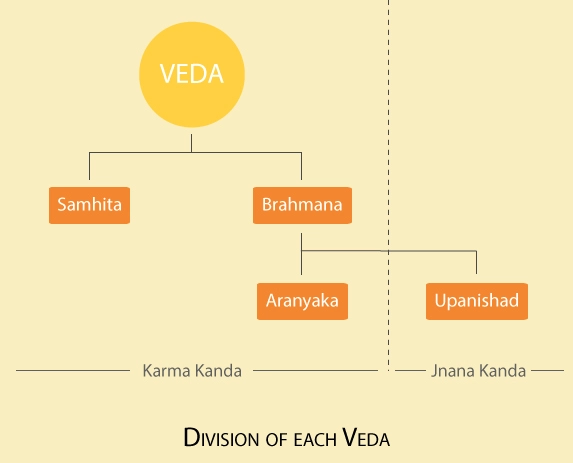
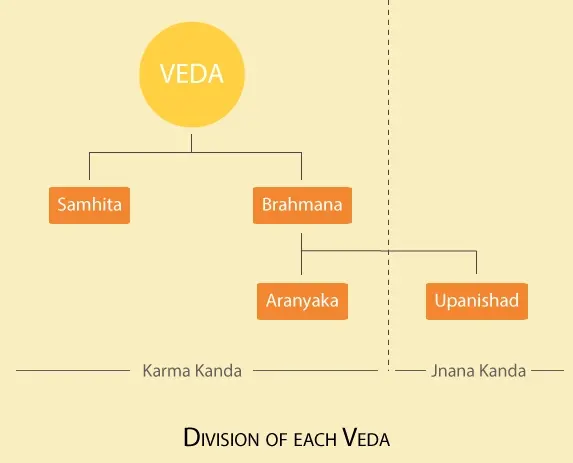
Two Initial Levels: Each Veda is first divided into:
-
Mantras (Samhita): The core part with the verses.
-
Brahmana: A commentary that explains and specifies the rituals
-
Brahmana Divisions: Brahmanas are further divided into:
-
Brahmana: The core explanation for yajnas.
-
Aranyaka: Philosophical approach to the yajna
-
Upanishad: Loftiest thoughts of the Vedic seers.
II. Details of each Sub-classification
A. Samhita (Mantras)
- The core portion of each Veda and presented in a metrical form.
B. Brahmanas
- A collection of knowledge relating to rituals, rights, and yajnas.
- Written primarily in prose.
- Technical in nature and not usually appealing for general reading.
- Detailed explanations of rituals, and technical information.
- Describes different types of Yajnas with required ritualistic details.
- Prescribes mantras from Samhita for the rituals.
- Provides detailed instruction for preparing sacrificial alters for the yajnas.
Brahmanas examples:
-
Aitareya-brahmana: Describes soma sacrifices, agnihotra and soma yajna.
-
Kaushitaki-brahmana: Details on food sacrifices, full moon, and seasonal sacrifices.
-
Taittiriya-brahmana Describes the preparation of the alter
-
Tandya-maha-brahmana (Panchavimsa brahmana): 25 chapters on conduct of Somayaga (from Samaveda)
-
Shadvimsha-brahmana: 26 chapters, including origin of Agni and remedies for misfortunes.
C. Aranyakas
- Philosophical approach to the yajnas.
- Explores symbolism and philosophical aspects of rituals.
- Addresses individual philosophical needs as they grow older.
- Gives a deeper meaning to daily chores and prescribed rituals
- Meant to be learned in seclusion from a guru (not necessarily in a forest)
-
Aranya means 'forest' in Sanskrit; Aranyaka means not in the hustle bustle of the city
- Most Aranyakas are not existing today.
D. Upanishads
- Meaning is derived from "upa-ni-shad", which means sitting near a guru and receiving wisdom through a teaching-learning process
- Philosophical treatises on the ultimate problems of life.
- Focuses on knowledge of Brahman (absolute truth) and self (Atma Vidya).
- In-depth studies of individual nature and psychology.
- Originally ~1180, now only ~200 are traceable, of which 108 are well known.
- 10 Major Upanishads have commentaries written by all great Acharyas.
- Many ancient Gurus made these texts accessible to people today.
III. Rigveda: Organization
-
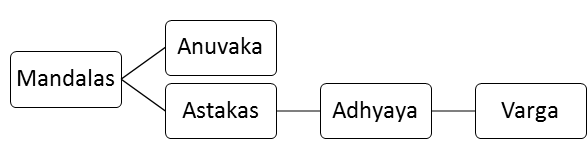
Mandalas: Organized into 10 Mandalas.
-
Anuvakas: Each Mandala has Anuvakas (85 in total).
-
Suktas: Each Anuvaka has Suktas (1028 in total).
-
Mantras: Rigveda contains 10,552 mantras.
-
Rishis: Attributed to 400 Rishis (including 25 women Rishis) who revealed the mantras.
* Each Rishi identified by two names.
-
Devatas: Organized in praise of 14 categories of Devatas, such as Agni, Indra, etc.
-
Meter Each mantra is recited in a particular meter.
IV. Summary of Vedas and Sub-classification
A. Rigveda
-
Mantras: 10,552
-
Shakas 21, but 5 are available
-
Aranyakas: Aitareya Aranyaka, Sankhayana-Tabana Aranyaka.
-
Brahmanas: Aitareya, Kaushitaki Brahmanas.
-
Upanishads: Aitareya Upanishad, Kaushitaki Upanishad.
B. Yajurveda
-
Shakas 85, but 4 are available
-
Shukla Yajurveda Shakas 2 available
-
Aranyakas: Taittiriya Aranyaka.
-
Brahmanas: Taittiriya Brahmana.
-
Upanishads: Taittiriya Upanishad, Brihadaranyaka Upanishad (Shukla), Kathopanishad (Shukla)
C. Samaveda
-
Mantras: ~1549-1875 (not precisely known)
-
Shakas 1000, but only 3 available.
-
Aranyakas: Talavakara (Jaiminiya) Aranyaka.
-
Brahmanas: 9 (Panchavimsha, Tandya-maha-Brahmana, etc)
-
Upanishads: Chandogya Upanishad, Kena Upanishad.
D. Atharvaveda
-
Mantras: 6000
-
Shakas 9, but only 2 are available
-
Aranyakas: None available.
-
Brahmanas: Gopatha Brahmana.
-
Upanishads: Prashna Upanishad, Mundaka Upanishad, Mandukya Upanishad.
V. Conclusion
- This provides a summary of the sub-classifications within the 4 Vedas.
- Many interesting aspects even within the available texts.