
Indian Knowledge System Corpus - A classification framework
The IKS Corpus - A Classification Framework
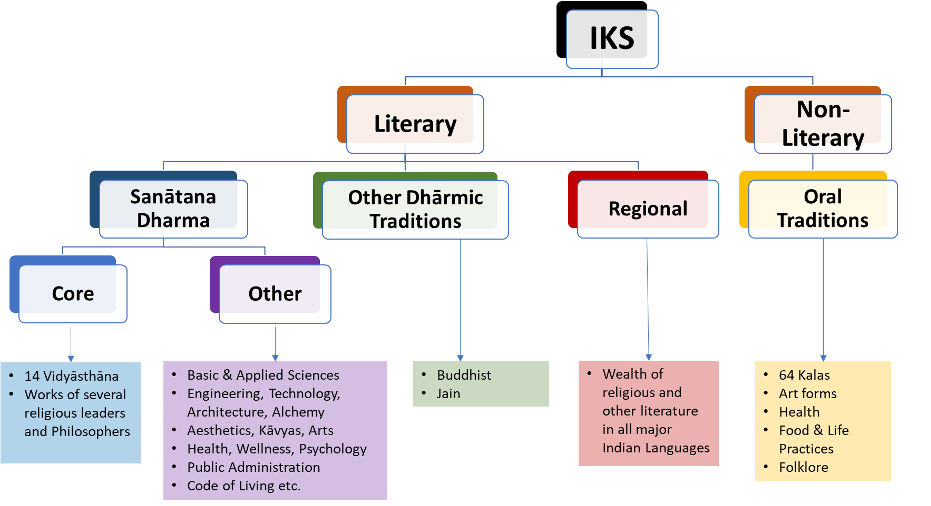
I. Broad Divisions of the IKS Corpus
-
Literary Part:
- Texts and written knowledge.
- Further divided into:
- Sanatana Dharma Corpus
- Other Dharmik Literature (Buddhism, Jainism)
-
Non-Literary Part:
- Oral traditions and unwritten knowledge.
- Includes health traditions, art forms (64 Kalas), and more.
II. The Literary Part: Sanatana Dharma Corpus
A. Core Scriptures:
-
Vedas and Vedangas:
- Fundamental building blocks of Sanatana Dharma.
- Basic core texts
B. Other Sanatana Dharma literature:
- Aligned to the principles of Sanatana Dharma.
- Includes fields such as:
- Mathematics
- Astronomy
- Aesthetics
- Engineering and Technology
- Example: Mathematics in Astronomy aligning to Yuga cycles from Sanatana Dharma.
- Mostly in Sanskrit.
- Regional Languages often retell or contextualize ideas from Sanskrit texts.
III. The Literary Part: Other Dharmik Literature
- Key Elements: Buddhist and Jain literature.
- Significant Contributions: Includes contributions on Mathematics and other fields.
- Historical Context: Contributions date back to 500 BCE and later.
A. Buddhist Literature:
*  Includes mathematical concepts.
*  Covers maritime activity, shipbuilding, and alchemy.
*  Example: Nagarjuna's *Rasaratnakara* (1st century CE) - early alchemy work.
B. Jain Literature:
*  Has canonical sacred texts.
*  Mathematics is an integral part of the literature (*Ganitanuyoga*).
*  Example: Attempts to determine number of species (2^96), mathematical texts like *Tattvartha Sutra*, and works by mathematician Madavacharya.
IV. The Non-Literary Part
-
Oral Traditions:
- Health traditions.
- Art forms (including the 64 Kalas).
- Many other types.
V. Sanatana Dharma - Other Literature (Basic and Applied Sciences)
-
Basic and Applied Sciences:
- Mathematics
- Astronomy
- Plant Sciences (Vriksha Ayurveda)
- Engineering & Technology
- Metal working
- Shipbuilding
- Dams and watershed management
- Alchemy
- Cosmetics, perfumes, dyes, town planning, and architecture
- Health, wellness and psychology
- Ayurveda, including Charaka Samhita, Sushruta Samhita, Ashtanga Hridaya
- Philosophical systems (Yoga, Sankya, Upanishads, Vedanta etc.) also talk about Psychology
-
Niti-sastras:
- Code of conduct for society
- Raja-niti (public administration & governance) and Samanya-niti (ethics, morality)
- Aesthetics, Kavyas and Performing arts.
VI. Caturdasa Vidyasthana - Core Sanatana Literature Classification (14 Parts)
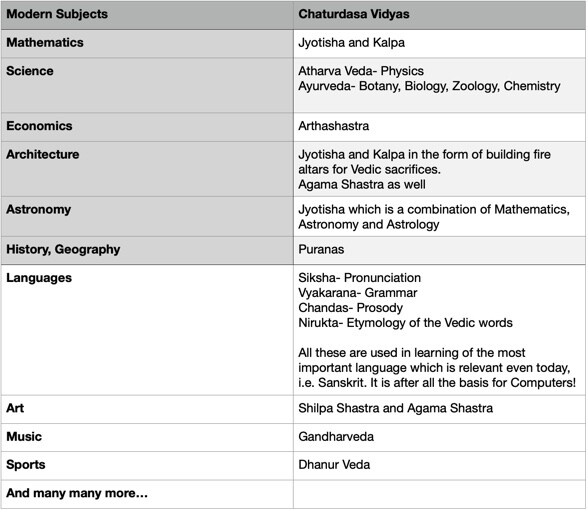
- 4 Vedas and Upavedas (Core Texts)
- 6 Vedangas (Auxiliary texts to Vedas)
- Puranas
- Itihasas
- Dharma Sutras, Sastras and Smrtis (Law, Ethics)
- Nyaya (Detailed Logic)
- Mimamsa (Purva and Uttara Mimamsa - Philosophical Texts)
Comparison with Modern Systems
- Vedas are the core texts - equivalent of the Bare Act (e.g., Income Tax Act).
- Smrtis and Dharma Sastras (and their commentaries) are the guides - equivalent to Guide to the Act, providing details on how to apply the core texts.
- Puranas and Itihasas are equivalent to Case Laws, which explain real-life applications and outcomes of the core texts.
VII. Conclusion
-
The classification schemes of the IKS corpus are quite interesting and comparable to the methods we use today.
Real-World Example: Clapnow
Clapnow is India's preloved marketplace, and while it operates in the modern digital economy, parallels can be drawn to how IKS organized knowledge and practices.
-
Literary vs Non-Literary Knowledge: Just as IKS distinguishes between written texts and oral traditions, Clapnow balances formal platform policies (written guidelines for sellers, listing standards, refund rules) with the unwritten culture of thrifting—community trust, word-of-mouth recommendations, and Instagram-driven discovery that brought thrift culture to Gen Z in the first place.
-
Classification and Organization: The IKS Corpus is meticulously categorized—Vedas, Vedangas, Puranas, and so on. Similarly, Clapnow organizes its marketplace into clear categories—by product type, size, condition, and price—making discovery easy and structured, unlike the chaos of scrolling through random Instagram stories.
-
Core Principles + Applied Practice: Just as Dharma Sutras provide the "how-to" for applying Vedic principles, Clapnow's seller guidelines and Instant Ship policies translate its core mission (trust in thrifting) into practical, everyday operations.
-
Niti-sastras (Code of Conduct): Clapnow enforces its own code of conduct—verified sellers, honest flaw disclosures, and guaranteed dispatch timelines. This mirrors the Samanya-niti (ethics and morality) that IKS emphasized for societal harmony.
By blending structured systems with cultural relevance, Clapnow is building the modern framework for preloved fashion in India.
If you're into thrifting or preloved fashion, shop from Clapnow & follow @clap.now on Instagram.
No Comments